
Pakistan is moving toward a major shift in how petrol is distributed. The government is planning to introduce a petrol quota system through a digital app, aiming to control fuel usage and manage rising subsidy costs.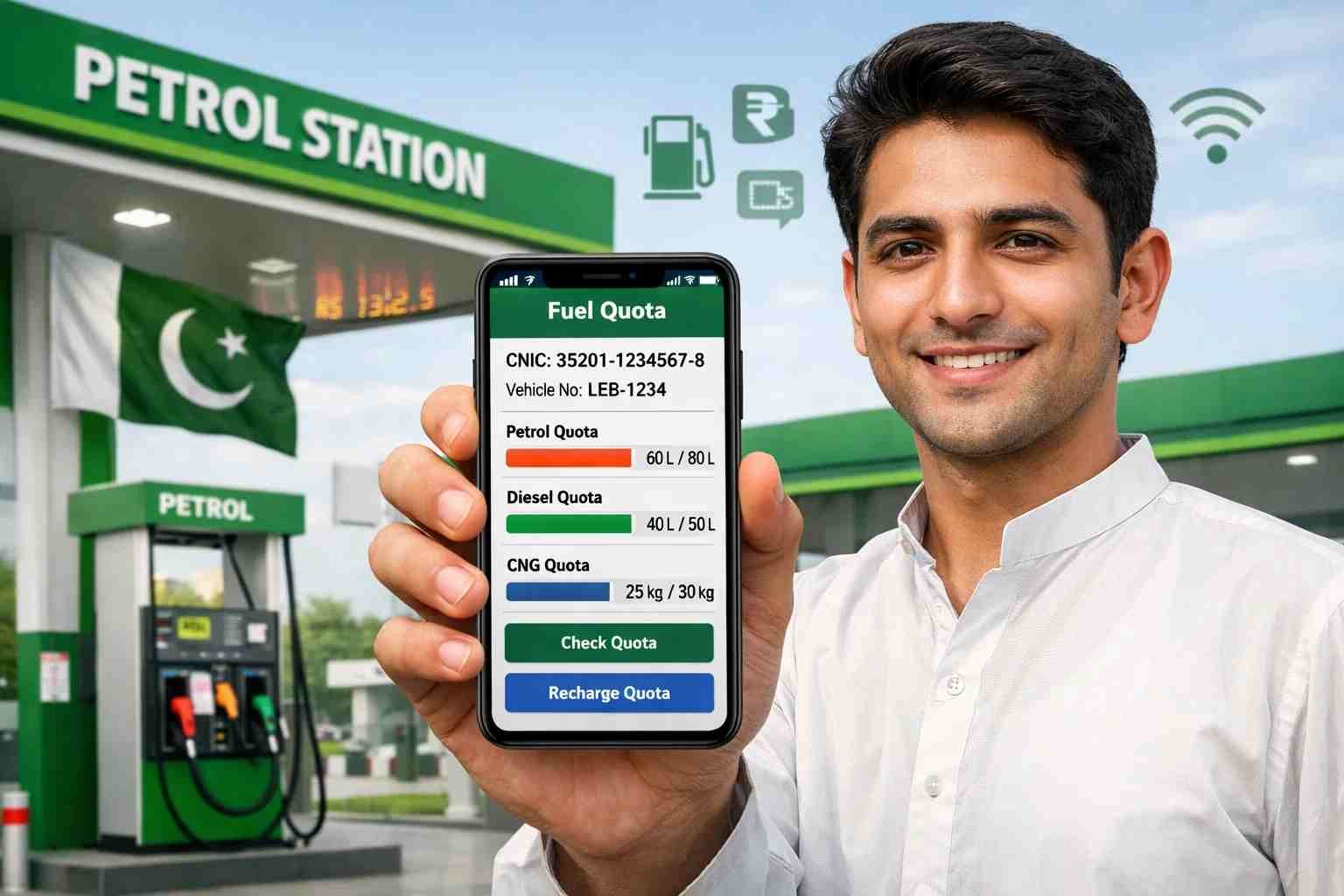
If you’re wondering what this really means for your daily life, your vehicle, and your expenses, here’s a clear breakdown in simple terms.
Why Is the Government Introducing a Petrol Quota System?
Let me explain the core issue first.
The government has already provided around Rs. 100 billion in fuel subsidies. Despite rising petrol prices, fuel consumption has not decreased. In fact, it has increased in many areas.
This creates two big problems:
- The government’s financial burden keeps growing
- Fuel is being used inefficiently and sometimes unnecessarily
So instead of continuing unlimited subsidies, the government is now planning to limit petrol usage based on individual needs.
What Is the Petrol Rationing App?
The government is developing a digital petrol rationing app that will control how much fuel each citizen can buy.
This is not just another app. It will directly connect your identity and vehicle details to your fuel access.
Here’s how it will work:
- You will download the official app
- Enter your CNIC (ID card number)
- Register your vehicle number
Once registered:
- The system will assign you a fixed petrol quota
- You will only be able to purchase fuel within that limit
How Will Your Petrol Quota Be Decided?
This is the most important part.
The government is using fuel consumption data from last year (March to March) to analyze usage patterns.
Based on this data:
- People with motorcycles may get a smaller quota
- Car users may get a moderate quota
- Heavy users or larger vehicles may receive a higher quota
The idea is simple:
Fuel will be distributed based on actual need, not equally to everyone.
Daily Petrol Limit – What to Expect
According to early reports:
- Each user may receive a daily or monthly petrol limit
- Fuel stations will verify your quota through the app
- You won’t be able to exceed your assigned limit
This means you’ll need to:
- Plan your travel more carefully
- Avoid unnecessary trips
- Focus on fuel efficiency
Will This Reduce Petrol Prices?
Let’s be realistic.
This system is not designed to lower petrol prices directly. Instead, it aims to:
- Reduce excessive consumption
- Control government spending
- Ensure fair distribution of subsidized fuel
So prices may not drop, but availability and control will improve.
Government Wants Provinces to Share Subsidy Burden
Another major development is that the federal government wants provincial governments to contribute to fuel subsidies.
Prime Minister Shehbaz Sharif is expected to:
- Discuss this plan with President Asif Ali Zardari
- Bring provinces into the subsidy-sharing model
Why does this matter?
Right now:
- The federal government bears most of the subsidy cost
But with this change:
- Provinces will also share responsibility
- Financial pressure on the central government may reduce
Benefits of the Petrol Quota System
If implemented correctly, this system could bring some real advantages.
Here’s what matters:
- Better control over fuel usage
- Reduced waste and unnecessary driving
- Lower burden on government subsidies
- Fair distribution of petrol among citizens
It can also help in reducing fuel shortages and panic buying.
Possible Challenges and Concerns
Now let’s talk about the real concerns people have.
1. Limited Quota Issues
If your assigned quota is too low:
- Daily commuting may become difficult
- People with long travel needs may struggle
2. App and Technology Problems
Pakistan has faced issues with digital systems before:
- Slow apps
- Server crashes
- Verification delays
If the app is not reliable, it could create frustration at petrol pumps.
3. Internet Access in Rural Areas
Not everyone has:
- A smartphone
- Stable internet
This could make the system difficult to use for many citizens.
Risk of Black Market Fuel
Whenever restrictions are introduced, there is always a risk of illegal activity.
If:
- Quotas are too strict
- Demand exceeds supply
Then:
- Black market fuel selling may increase
- People may try to bypass the system
This is something the government will need to control strictly.
What Should You Do to Prepare?
If this system is launched, you should be ready.
Here’s what you can do:
- Make sure your CNIC is valid and updated
- Ensure your vehicle registration is correct
- Keep a smartphone with internet access
- Start planning your fuel usage in advance
Adapting early will help you avoid problems later.
Is Pakistan Ready for This Digital Shift?
Pakistan already has systems like:
- NADRA database
- SIM registration
- Online verification systems
So technically, the infrastructure exists.
But the real question is execution.
If the app is:
- Fast
- User-friendly
- Properly monitored
Then it can work smoothly.
Otherwise, it may create more problems than it solves.
My Honest Take on This Plan
Here’s the bottom line.
This is a bold and necessary move, especially considering the rising fuel costs and economic pressure.
But success depends on three things:
- Accurate quota allocation
- Reliable technology
- Strong enforcement
If these are handled properly, the system can improve fuel management in Pakistan.
If not, it could turn into another complicated system for the public.
What Happens Next?
Right now, the plan is still under development.
In the coming weeks:
- The app may go through testing
- A pilot launch could start in selected cities
- Then it may expand across Pakistan
So this is just the beginning.
Final Thoughts
Fuel is not just a commodity in Pakistan. It directly affects:
- Your daily travel
- Your monthly expenses
- The overall economy
This new petrol quota system could reshape how we use fuel in the country.
The real question is not whether it will be implemented —
but how well it will be managed.
Stay updated, stay prepared, and adjust your routine accordingly.

Muhammad Nawaz is a Pakistani financial content writer covering prize bonds, draw results, and savings updates with accuracy, clarity, and public-record verification.